What Your Feed Is Quietly Skipping Over — And Why It Matters
Your social media feed feels personal. Curated. Like it gets you. That's the whole pitch — a stream of content shaped around your interests, served up in an endless scroll tailored to your tastes.
But there's a version of the internet you're not seeing. And the gap between what gets surfaced and what gets silenced is bigger — and more consequential — than most people realize.
The Algorithm Has a Point of View
Every major platform runs on a recommendation engine built to maximize one thing above all else: engagement. Time on app, clicks, shares, comments. The content that generates the most of those signals gets pushed. Everything else gets filtered out — not by a person, not through any deliberate editorial judgment, but through the cold math of optimization.
The problem is that optimization isn't neutral. It has biases baked into it, shaped by the data it was trained on, the incentives of the platform, and the feedback loops created by millions of users who've already been nudged toward certain types of content.
"These systems are trained on historical behavior," explains Dr. Camille Osei, a researcher who studies algorithmic fairness at a Washington D.C. policy institute. "And historical behavior reflects existing inequalities. So the algorithm doesn't just reflect culture — it amplifies certain parts of it and suppresses others."
The result is what researchers call an "information gap" — a growing distance between what's actually happening in the world and what any given user's feed represents.
Local News Is Nearly Invisible
Ask your feed about a celebrity breakup and you'll have seventeen takes in thirty seconds. Ask it about your city council's vote on housing policy last Tuesday and you'll get nothing.
Local journalism has been one of the biggest casualties of the algorithmic era. National content — especially content with broad emotional appeal — consistently outperforms local reporting on every major platform. A story about a national political figure generates more clicks than a story about a school board in rural Ohio. The algorithm sees that signal and responds accordingly.
The consequence is significant. A 2023 analysis by the Local News Initiative found that social media referral traffic to local news sites had dropped by more than 50% over a five-year period, with algorithmic changes at Facebook cited as a primary driver. Communities that once relied on social platforms to distribute local reporting are now functionally cut off from it.
"The feed isn't designed to serve your community," says journalist and media critic Dana Reyes, who covers platform policy. "It's designed to serve the platform. Those two things occasionally overlap, but they're not the same goal."
Certain Voices Don't Travel as Far
Multiple independent studies have documented disparities in how content from creators of different racial and cultural backgrounds performs across recommendation systems.
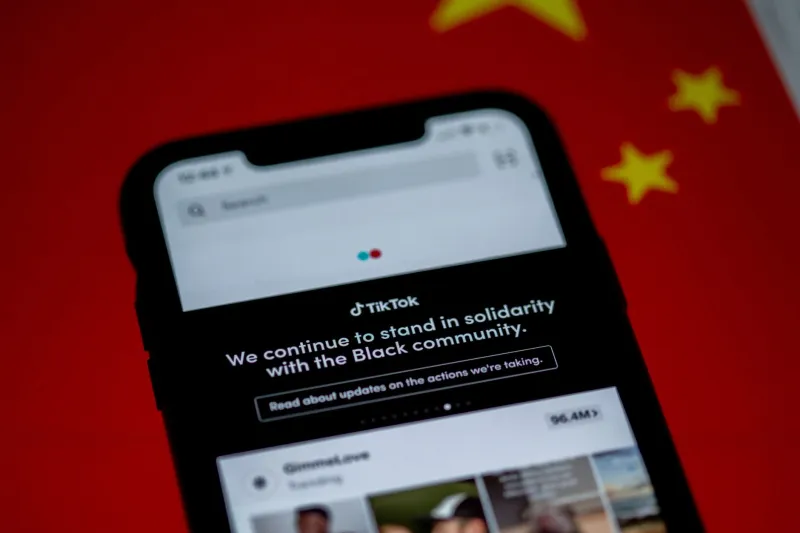
In 2020, Black creators on TikTok publicly called out what they described as systematic suppression of their content — lower view counts, reduced distribution, and hashtag blocking that they argued was disproportionately applied to Black cultural content. TikTok acknowledged some of the issues and attributed them to overzealous anti-bullying filters, but critics argued the explanation was incomplete.
Similar concerns have been raised on Instagram, YouTube, and Twitter/X. A 2022 audit commissioned by Twitter found that its recommendation algorithm amplified content from right-leaning political accounts at higher rates than left-leaning ones in several Western countries — a finding the company itself published, to its credit, though the underlying mechanism was never fully resolved before the platform changed ownership.
"The audits that do exist tend to be commissioned by the platforms themselves, which creates an obvious conflict of interest," Dr. Osei notes. "What we really need is independent, third-party access to algorithmic systems. And right now, in the U.S., we don't have that."
The Mental Health and Political Content Squeeze
Over the past three years, both Instagram and TikTok have implemented policies that deliberately reduce the reach of certain content categories — even when that content doesn't violate any rules.
TikTok has confirmed that it downranks content related to topics it classifies as "potentially distressing," including some mental health discussions, eating disorder awareness posts, and certain political content. The stated goal is user wellbeing. But the effect is that creators working in mental health advocacy — people doing genuinely valuable work — find their content mysteriously underperforming.
Instagram has similarly acknowledged reducing the distribution of political content, a policy that applies across the board but has drawn criticism from advocacy groups who argue it disproportionately affects activists and issue-based creators whose work is inherently political.
"There's a real tension here," says Reyes. "Platforms don't want to be responsible for political radicalization or mental health harms, which is understandable. But the solution they've landed on — just make it all less visible — creates its own harm. People who need support communities can't find them. Civic voices get quieted."
What You Can Actually Do About It
The algorithmic blindspot problem is structural, but that doesn't mean users are entirely without options.
Several researchers and digital literacy advocates recommend what they call "intentional diversification" — deliberately seeking out content outside your normal feed patterns, following creators whose work the algorithm is unlikely to surface on its own, and using platform search functions rather than passive scrolling as your primary discovery method.
RSS readers, email newsletters, and curated link aggregators have seen a modest revival among users frustrated with algorithmic curation — a trend we've been tracking closely here at ScrollerBase. These tools put the user back in control of the information diet, even if they require more active effort.
Browser extensions like Ground News's bias checker or AllSides can also help surface the political and geographic diversity missing from social feeds, giving a broader view of how different outlets are covering the same events.
But the larger fix has to come from somewhere else. Researchers and policy advocates are increasingly pushing for algorithmic transparency legislation — rules that would require platforms to disclose how their recommendation systems work and submit to independent auditing. Several proposals have moved through Congress in recent years, though none have cleared both chambers.
Until something changes structurally, the feed will keep making choices on your behalf. The least you can do is know that it's happening — and occasionally scroll somewhere it wasn't planning to take you.