Scroll First, Report Later: How TikTok Became Gen Z's Breaking News Wire
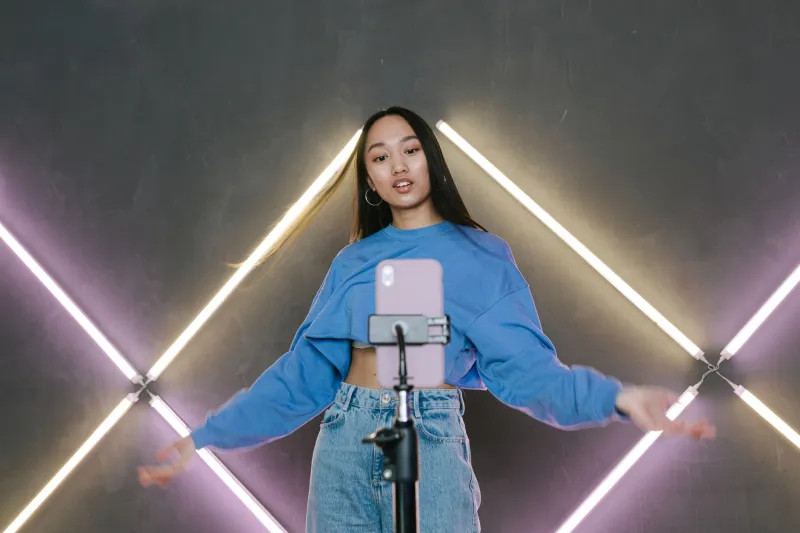
When protests erupted across US college campuses in spring 2024, a lot of Americans found out about them the same way they find out about most things now: through a 30-second vertical video, soundtracked to an audio clip that had already been remixed seventeen times, posted by someone they'd never heard of who happened to be standing in the middle of it.
By the time the major networks ran their first packages, TikTok had already cycled through the initial shock, the counter-narratives, the memes, and the think-pieces — all in a format that maxes out at ten minutes but usually lands somewhere closer to forty-five seconds.
This is the TikTok news cycle. It's faster, messier, and more emotionally immediate than anything that came before it. And for Gen Z — roughly anyone born between 1997 and 2012 — it's not a supplement to traditional news. For many of them, it is the news.
The Numbers Don't Lie (But They Do Scroll Fast)
A 2023 Pew Research survey found that roughly one in three US adults under 30 regularly gets news from TikTok. Among 18-to-24-year-olds, that number climbs higher. Meanwhile, cable news viewership in that demographic has been in freefall for years, and even Twitter/X — once the default real-time news platform — has seen significant Gen Z abandonment since Elon Musk's acquisition.
TikTok didn't set out to be a news platform. It set out to be an entertainment app. But when you build a discovery engine that serves people content based on what they engage with, and you put that engine in front of a generation that cares deeply about social justice, climate, politics, and identity — you end up with a de facto newsfeed whether you planned for it or not.
The algorithm doesn't distinguish between a dance trend and a dispatch from a protest. It treats both the same way: if people watch it, share it, and stitch it, it gets pushed further. Breaking news, it turns out, is extremely stitchable.
When TikTok Got There First
There's a growing list of stories where TikTok's scroll-based discovery beat traditional media to the punch — not just in speed, but in depth and nuance.
The water crisis in Jackson, Mississippi got significant TikTok traction in 2022 from local creators documenting conditions on the ground before most national outlets had assigned reporters. The early spread of information about the collapse of Silicon Valley Bank in March 2023 was partly driven by finance TikTok — a surprisingly robust community of creators who translated complex banking mechanics into digestible short-form content before mainstream business press fully contextualized the situation for general audiences.
More recently, international conflicts have played out on TikTok in real time, with creators on the ground posting raw footage that precedes — and sometimes contradicts — official statements. For younger viewers, this creates a fundamentally different relationship with events as they unfold. They're not waiting for a reporter to interpret something. They're watching someone live it.
"My students will come into class having already seen footage, heard multiple perspectives, and formed opinions about something that I'm only reading about in my morning briefing," said one journalism professor at a large Midwestern university who asked not to be named. "The information hierarchy has completely inverted."
The Integrity Problem Nobody Has Solved
Here's the part that makes media scholars and working journalists deeply uncomfortable: TikTok's news ecosystem has essentially no editorial infrastructure.
There are no editors assigning stories, no fact-checkers reviewing claims before they go out, no standards desks making calls about what's verified enough to publish. A video from a credible eyewitness and a video from someone who just fabricated a claim look identical in the feed. The algorithm can't tell the difference, and neither can most viewers — especially when the fabricated claim gets more engagement because it's more emotionally provocative.
Misinformation spreads on TikTok for the same reason real news does: it's emotionally activating, it's shareable, and the discovery engine rewards engagement without asking questions about accuracy.
TikTok has invested in fact-checking partnerships and content labels for election-related content, but enforcement is inconsistent and the scale of the platform makes comprehensive moderation essentially impossible. The company has also faced ongoing scrutiny from US lawmakers about data practices and potential foreign influence — concerns that add another layer of complexity to treating it as a trusted news source.
How Newsrooms Are Scrambling to Adapt
Legacy media organizations are not sitting still. The New York Times, Washington Post, NBC News, and dozens of local outlets now have dedicated TikTok presences. Some have invested in vertical video studios and hired creators specifically to translate reporting into short-form content.
But there's a tension baked into this adaptation. Journalism is slow because being accurate takes time. TikTok rewards speed. When newsrooms try to compete on TikTok's terms, they risk cutting corners that exist for good reasons. When they don't compete, they cede the information space to creators who aren't bound by the same standards.
Some outlets are trying a third path: using TikTok as a discovery layer rather than a publishing platform — posting content that drives audiences back to longer, more thoroughly reported pieces. Early results are mixed. Gen Z users aren't reliably clicking through, and the algorithm doesn't reward content that functions as a teaser for something that lives off-platform.
What This Means for How a Generation Understands the World
The deeper question isn't really about TikTok specifically. It's about what happens to collective understanding of current events when the primary discovery mechanism is an engagement algorithm that optimizes for emotional response.
Gen Z isn't less informed than previous generations — in many ways, they're more exposed to more information from more perspectives than any generation before them. But the format shapes the understanding. Fifteen seconds is enough to know something happened. It's rarely enough to understand why, what came before, or what the full context is.
At ScrollerBase, we spend a lot of time thinking about what the scroll reveals about us. And right now, the scroll is telling us that a generation is building its worldview in real time, one short video at a time — with all the immediacy, energy, and incompleteness that implies.