Your Feed Is Personally Calibrated to Keep You Hooked — And Not Everyone Gets the Same Recipe
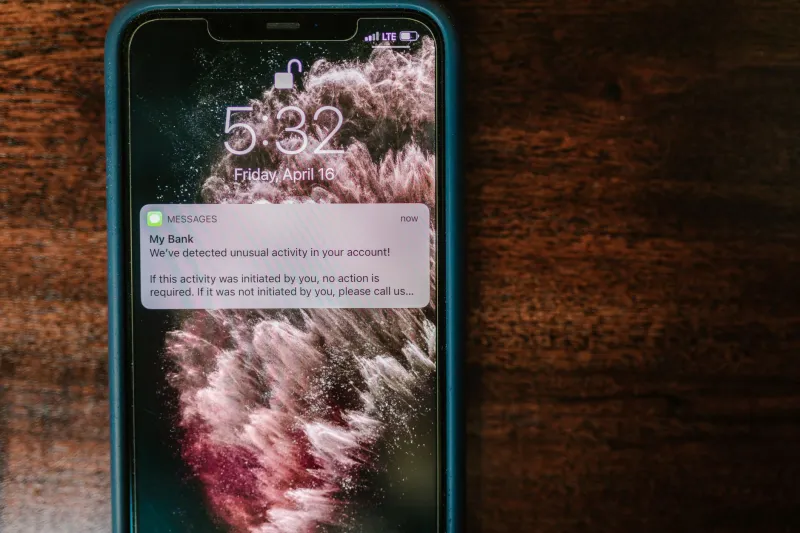
Have you ever noticed that some people seem genuinely unbothered by their phones? They'll go a full weekend without cracking open Instagram, and when they do, they're greeted with a dopamine rush of hundreds of unread notifications and a feed packed with stuff they actually want to see. Meanwhile, you've checked TikTok four times in the last hour and still feel weirdly unsatisfied.
That's not a personality difference. At least, not entirely. It might be your platform working exactly as intended — just on a different setting than your phone-free friend's.
The Variable Reward Machine Underneath Your App
Behavioral scientists have known for decades that variable reward schedules — the kind where you don't know when the payoff is coming — are the most psychologically sticky reinforcement pattern humans experience. It's the same mechanic that makes slot machines so hard to walk away from. Social platforms figured this out early, and they've been refining it ever since.
But here's what's gotten less attention: the rate of that variability isn't the same for everyone. Platforms don't just randomize your rewards — they personalize the tempo of them based on granular data about how you individually respond to stimulation.
Dr. Pamela Rutledge, a media psychologist and director of the Media Psychology Research Center, puts it plainly: "These systems are optimizing for engagement at the individual level. They're not serving you a generic experience — they're running thousands of micro-experiments on your behavior to find your specific threshold."
That threshold looks different depending on who you are. For some users, constant low-grade notifications keep them tethered to the app throughout the day. For others, platforms seem to pull back — holding likes and comments in a kind of artificial drought — before releasing them in a satisfying burst. Both strategies accomplish the same goal: maximum time-on-platform.
The Drought-and-Burst Pattern
If you've ever posted something on Instagram and watched it get almost no engagement for hours, then suddenly receive a wave of likes all at once, you've experienced what researchers sometimes call "batched reward delivery." Whether platforms do this intentionally or whether it emerges from algorithmic optimization is genuinely contested — but the effect on behavior is real either way.
"There's a meaningful difference between emergent optimization and intentional design," says Dr. T. Dalton Combs, a behavioral scientist who has studied digital engagement systems. "But from the user's perspective, that distinction doesn't really matter. The psychological impact is the same."
Some users, particularly those who post infrequently or who have shown lower baseline engagement, appear to receive these batched reward patterns more often. The theory is that a concentrated hit of engagement is more motivating for someone who doesn't check constantly, while a steady drip of small interactions keeps high-frequency users coming back every few minutes.
In other words: the platform is running a personalized engagement experiment on you, and you opted in by downloading the app.
Why Your Notification Settings Are Almost Beside the Point
Here's where it gets particularly interesting for anyone who thinks they've outsmarted the system by turning off notifications. Platform engagement researchers have documented that many users who disable push notifications simply develop manual checking habits that can be more compulsive than notification-driven ones — because now the uncertainty is entirely self-generated.
You're not checking because you were reminded. You're checking because you can't stand not knowing.
This is precisely the kind of behavioral shift that platform systems can detect and adapt to. If your check-ins become more frequent after you kill notifications, the algorithm registers that pattern and continues optimizing around it.
"The notification layer is almost a distraction from the deeper architecture," one former platform product manager, who asked not to be named, told ScrollerBase. "The real engagement hooks are built into the content sequencing and reward timing. Notifications are just the most visible part."
The Personalization Layer Most Users Never See
When people talk about algorithmic feeds, they usually mean content recommendations — the system figuring out that you like cooking videos or political commentary. But there's a layer beneath that: the behavioral profile that determines not just what you see, but when you see it, how often you're rewarded for engagement, and how long the platform lets you feel satisfied before nudging you back.
This profile is built from signals most users would never think to consider: how long you hover on a post before scrolling, whether you open an app then immediately close it, what time of day you're most likely to respond to a notification, and how your engagement changes during periods of stress or boredom.
The resulting system isn't just serving you content. It's managing your psychological state — keeping you in what some researchers describe as a "productive dissatisfaction" zone. Engaged enough to stay, but never quite fulfilled enough to feel done.
Is Any of This Actually Intentional?
The honest answer is: probably both. Platform engineers build systems that optimize for engagement metrics, and those systems learn individual behavioral patterns at scale. Whether a specific product manager sat down and said "let's give this user type a drought-burst reward schedule" is less relevant than the fact that the optimization process arrives at that outcome naturally when the objective is maximizing time-on-platform.
What's harder to dismiss is that behavioral research on variable reward schedules has been publicly available for decades. Platform designers are not naive about what they're building.
"These aren't accidental outcomes," Dr. Rutledge says. "When you build a system that optimizes for engagement and you know the behavioral science literature, you are making a choice."
What You Can Actually Do With This Information
Understanding that your feed is personalized at the reward-timing level — not just the content level — changes how you might think about your own usage patterns. If you're a compulsive checker, the platform has likely found your frequency sweet spot. If you go days without opening an app and then binge it, that's a profile too.
Some digital wellness researchers suggest deliberately disrupting your own patterns — checking at random times, using apps on a schedule rather than by impulse — as a way to confuse the behavioral model. It's not a clean solution, but it's a way of introducing noise into a system that depends on your predictability.
At ScrollerBase, we're not here to tell you to delete your apps. But knowing that your relationship with a platform has been individually engineered — not just generally designed — seems like information worth having before your next scroll session.