Engineered to Hook: The Hidden Psychology Behind Content You Can't Stop Watching
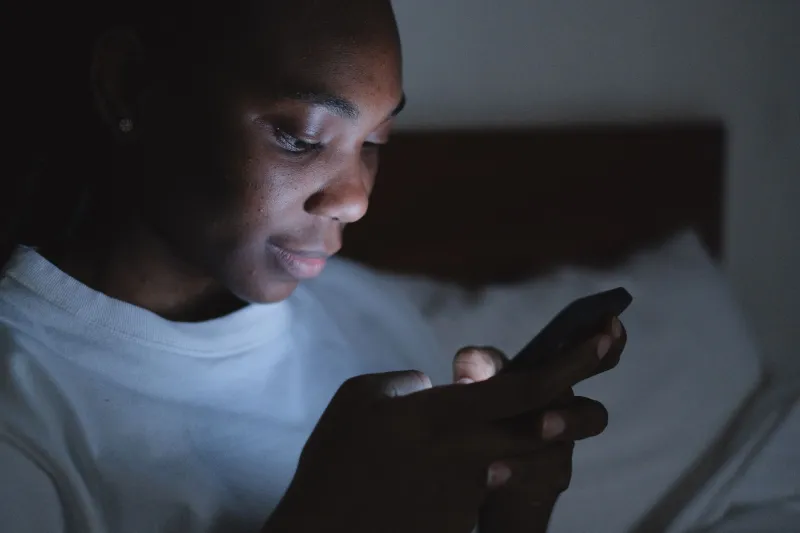
Somewhere between opening TikTok to kill two minutes and suddenly realizing it's been an hour and a half, something happened to your brain. You didn't choose to stay. You were kept.
That's not an accident. And increasingly, it's not even subtle.
A growing number of creators — from YouTube veterans to Instagram Reels newcomers — are openly talking about the psychological architecture built into their content. The thumbnails, the pacing, the unresolved questions dangled at the end of every video. These aren't creative flourishes. They're triggers. And they're working exactly as intended.
The First Three Seconds Are Everything
Ask any creator who's cracked a million views what they obsess over most, and the answer is almost always the same: the hook.
"I spend more time on the first three seconds than I do on the rest of the video combined," says Marcus Trevino, a Dallas-based creator with over 2.4 million YouTube subscribers. "If I don't earn your attention immediately, the algorithm buries me. So I've basically become a student of what makes people freeze mid-scroll."
What makes people freeze, it turns out, is novelty, conflict, and unresolved tension — three things the human brain is neurologically wired to chase. Dr. Priya Mehta, a cognitive neuroscientist at the University of Michigan who studies media consumption, explains it this way: "The dopamine system isn't actually triggered by reward. It's triggered by the anticipation of reward. Creators who understand that structure their content to constantly delay the payoff."
That delay is intentional. The thumbnail shows something surprising. The opening line promises a revelation. But the resolution? That comes later — if it comes at all.
Thumbnail Design Is a Neuroscience Project
Before a single second of video plays, a thumbnail has already done most of the psychological heavy lifting.
Studies on visual attention show that human eyes are instinctively drawn to faces — specifically, faces expressing exaggerated emotion. That's why so many YouTube thumbnails feature creators mid-gasp, wide-eyed, or frozen in theatrical shock. It's not a personality quirk. It's a conversion strategy.
Color contrast plays a role too. Bright yellows and reds against dark backgrounds aren't chosen because they look nice. They're chosen because they pop against the gray-white scroll environment of most platforms, triggering what designers call a "pattern interrupt" — a visual jolt that forces your eye to stop moving.
"I A/B test my thumbnails like a tech startup tests a landing page," says Kezia Okafor, a Chicago-based lifestyle creator who publishes detailed content breakdowns on her Substack. "I've had the same video perform 40% better just by changing the expression on my face in the thumbnail. Same title, same content, completely different result."
The platforms themselves feed this optimization loop. YouTube's analytics dashboard shows creators exactly how often their thumbnail converts a viewer into a click. That number — the click-through rate — becomes an obsession. And the easiest way to improve it is to make the thumbnail more emotionally provocative.
Comment Sections Aren't Conversations — They're Retention Machines
Here's one most people don't see coming: the comment section is engineered too.
Many creators deliberately leave minor errors in their videos — a mispronounced word, a slightly wrong statistic, an intentionally controversial take — because they know viewers will rush to the comments to correct them. Every comment extends the video's engagement window in the algorithm's eyes. More comments signal more interest, which triggers wider distribution.
"I call it the correction bait," Trevino says, half-laughing. "Say something slightly wrong about a sports stat and watch the comments light up. I'm not proud of it, but it works."
Beyond that, creators are trained to end videos with open-ended questions. "What do you think?" and "Drop your take below" aren't genuine invitations to dialogue. They're prompts designed to manufacture engagement signals that tell the algorithm the content is worth pushing further.
Dr. Mehta points out that this dynamic creates a social reward loop on top of the content one. "When someone leaves a comment and gets a reply or a like, that's another dopamine hit. Now you're not just hooked on the content — you're hooked on the social interaction the content enabled. The two systems reinforce each other."
The Cliffhanger Economy
Netflix famously popularized the post-credits hook — that final scene designed to make closing the laptop feel genuinely painful. Creators have imported that exact mechanic into short-form content.
Watch enough YouTube videos and you'll notice a pattern: the most important piece of information in any given video is almost never delivered first. It's teased in the intro, referenced in the middle, and finally revealed near the end — but not before another teaser for the next video is dropped.
This is serial storytelling logic applied to content that was never supposed to be serialized. And it's devastatingly effective.
"I think of each video as an episode," says Jordan Hale, a finance creator based in Atlanta with a dedicated following across YouTube and Twitter. "I want you to feel like you walked away with value, but also like there's still something you need. That tension is what makes people subscribe. Subscriptions are just dopamine on a delay."
Knowing the Trick Doesn't Break the Spell
Here's the uncomfortable part: understanding all of this doesn't necessarily make you immune to it.
Dr. Mehta is blunt about this. "The dopamine system operates largely beneath conscious awareness. You can intellectually understand that a thumbnail is manipulating you and still click on it. Knowing the mechanism doesn't disable it."
That's a strange position to be in as a consumer. You're scrolling a feed that's been engineered by algorithms, watching content built by creators who've reverse-engineered those algorithms, designed around psychological triggers you can identify but can't fully override.
What you can do, researchers suggest, is build friction. Pause before clicking. Notice when you're being teased rather than informed. Recognize the cliffhanger for what it is.
Or, as Kezia Okafor puts it from the creator side: "I genuinely love making content and I want people to enjoy it. But I also want them to know what's happening when they watch it. An informed audience is a better audience. Even if they still click the thumbnail."
The scroll continues. But at least now you know who's steering.